
MIAMI: WHERE SOPHISTICATION MEETS THE SEA
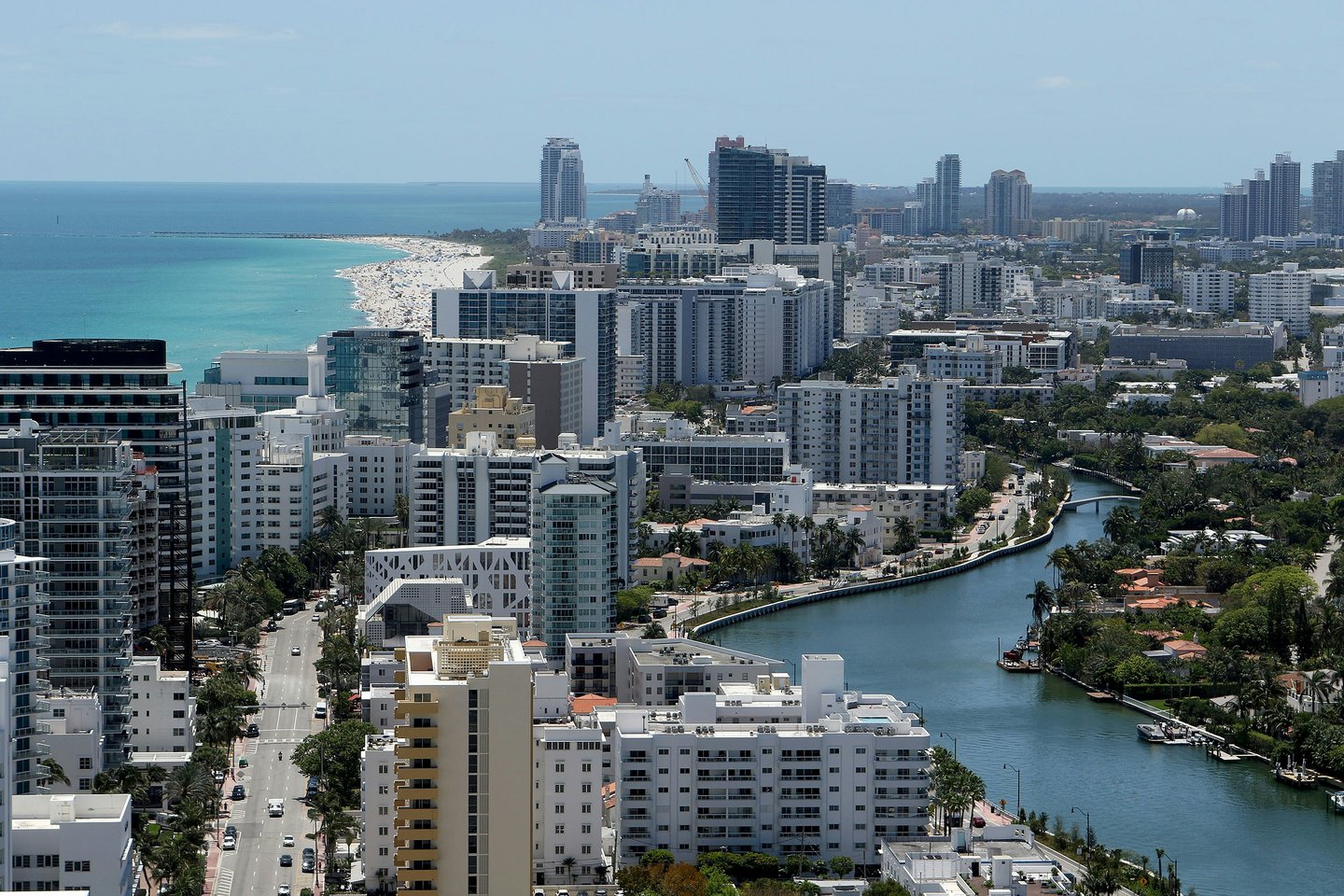
Discover Miami - A Vibrant City
Sun-soaked beaches, vibrant culture, and endless energy in Florida's most glamorous city.
Miami pulses with an energy unlike anywhere else in America. This sun-drenched metropolis on Florida's southeastern coast combines the glamour of South Beach, the authenticity of Little Havana, the sophistication of Coral Gables, and the cutting-edge art scene of Wynwood into one irresistible destination. With average temperatures hovering around 75-80°F (24-27°C) year-round, pastel-colored Art Deco architecture lining Ocean Drive, and a cultural fusion that feels more Caribbean than continental, Miami offers a distinctly international flavor while remaining unmistakably American.
From the moment you arrive, Miami captivates with its contradictions: laid-back beach culture meets high-powered business energy, historic preservation stands alongside ultramodern architecture, and diverse communities from across Latin America and the Caribbean create a genuinely multicultural experience. Whether you're seeking world-class beaches, cutting-edge contemporary art, Cuban cuisine, designer shopping, or legendary nightlife, Miami delivers with tropical flair and cosmopolitan sophistication.
This guide explores Miami's essential experiences, from South Beach's iconic shores to the Everglades' natural wonders, revealing how to navigate this vibrant city with insight and style. Whether you're planning a first visit or returning to discover new facets of the Magic City, you'll find the practical knowledge and inspiration needed to create your perfect Miami experience.
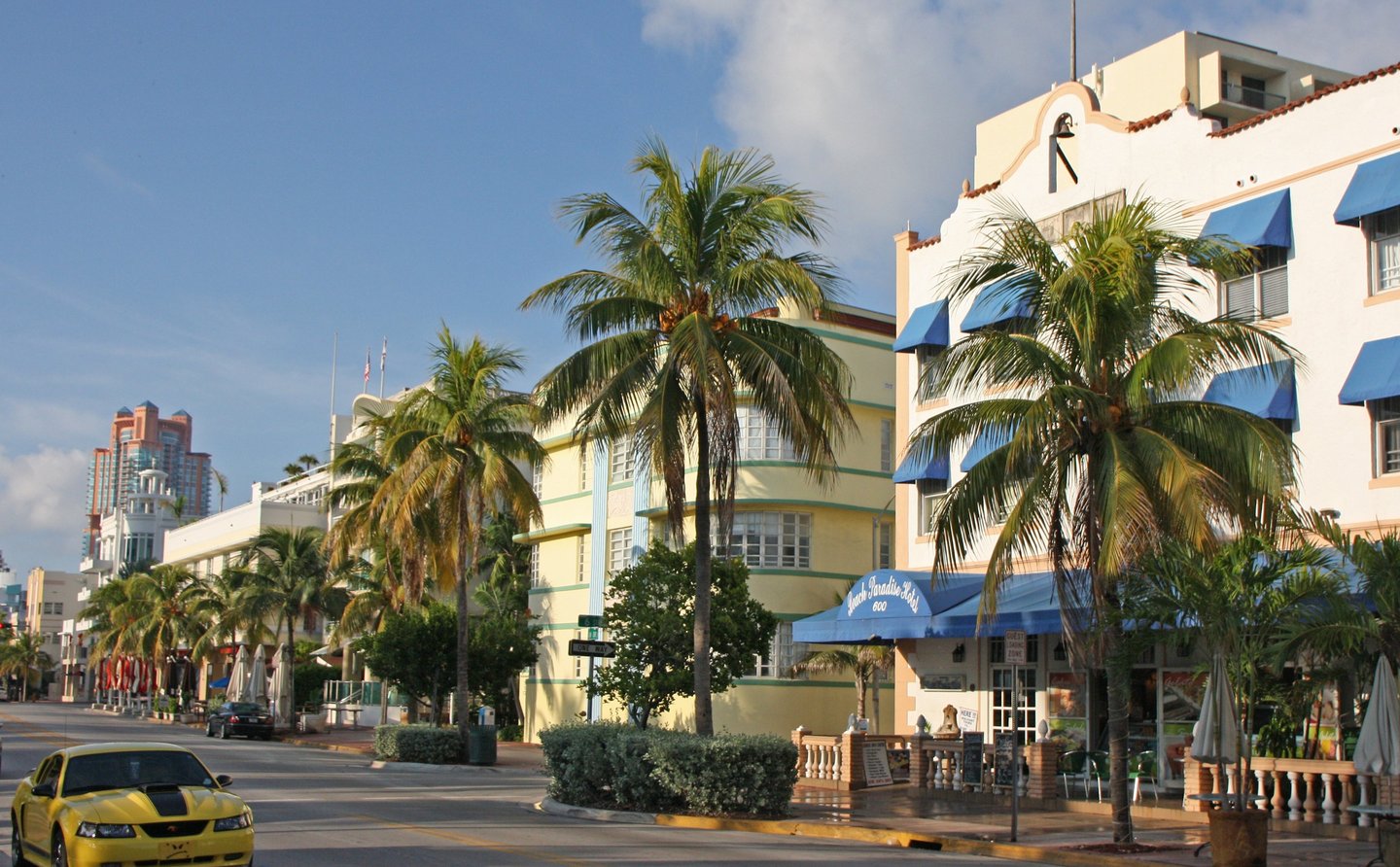
Miami's iconic Art Deco architecture defines South Beach's character
Or compare on Expedia
When to Visit Miami
Best Time: December to April
Miami's winter months offer the perfect escape from cold northern climates, with temperatures ranging from 65-80°F (18-27°C), low humidity, and minimal rainfall. This high season brings perfect beach weather, outdoor festivals, and Art Basel Miami Beach in early December. Getyourguide offers excellent tours during this period, from Everglades airboat adventures to sunset cruises along Biscayne Bay. Expect higher accommodation prices and crowded beaches, but the guaranteed sunshine and comfortable temperatures make it worthwhile. Book hotels and restaurants well in advance during this period.
Shoulder Season: May and November
These transitional months offer an attractive balance between favorable weather and lower prices. May brings warm temperatures perfect for beach activities before summer heat arrives, while November provides relief from summer humidity with pleasant conditions. Both months see fewer crowds than peak winter season, making attractions and beaches more enjoyable. Hotel rates drop significantly, and restaurant reservations become easier to secure. May marks the technical start of hurricane season, though major storms remain uncommon this early.
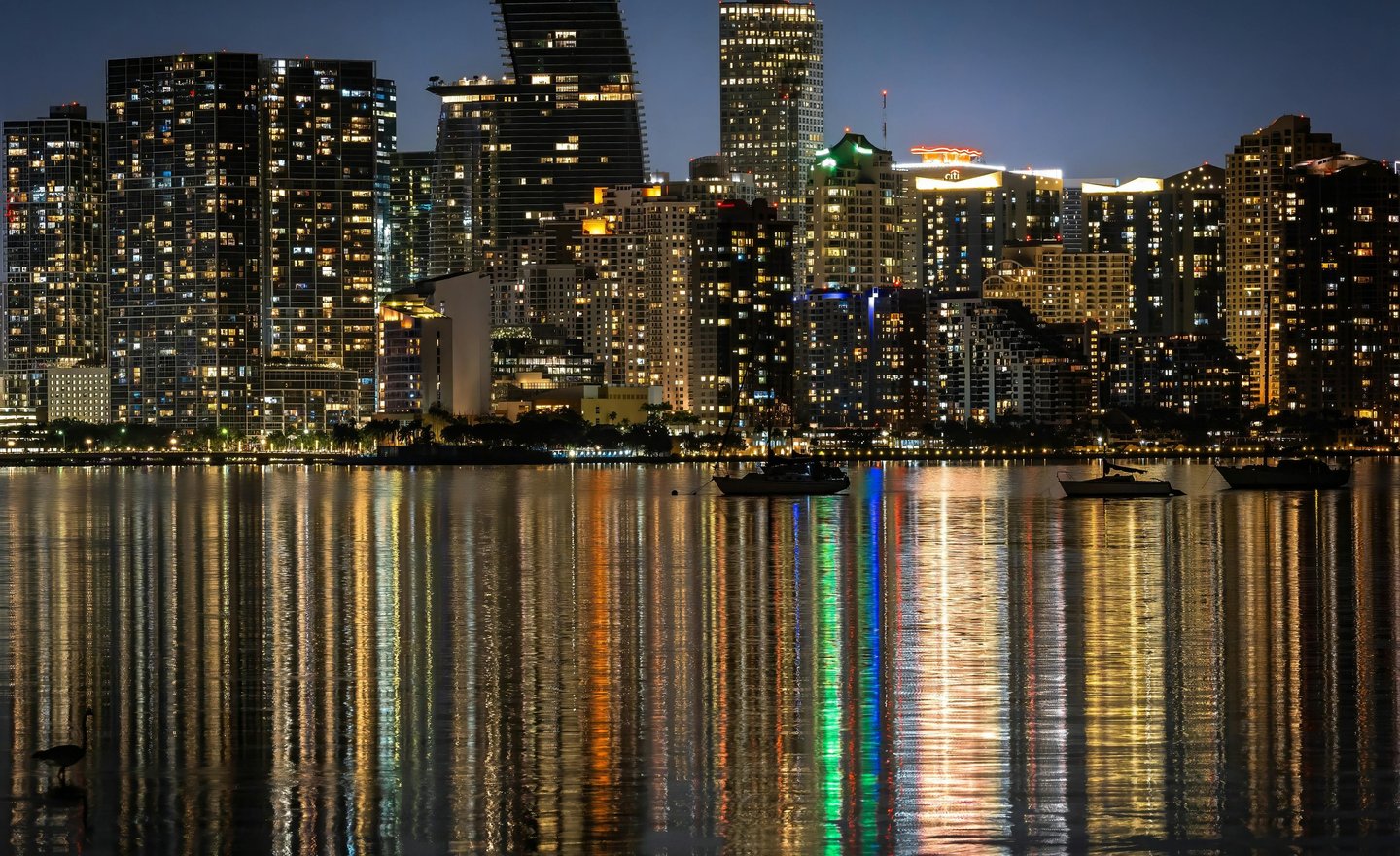
View of Miami skyline at the golden hour
Summer (June-August)
Miami's summer brings intense heat (85-95°F / 29-35°C), high humidity, and afternoon thunderstorms, but also the lowest prices and most authentic local experience. If you can handle the weather, you'll find excellent deals on luxury hotels, empty beaches in the mornings, and a more relaxed vibe as tourists depart. The ocean is at its warmest for swimming. Indoor attractions like museums and shopping become more appealing during midday heat.
Hurricane Season Considerations
The Atlantic hurricane season officially runs June through November, with peak activity in August and September. While direct hits remain relatively rare, the possibility requires consideration when booking. Purchase travel insurance that covers weather-related cancellations. Monitor forecasts if traveling during these months, as hotels and airlines typically offer flexibility when storms threaten. Miami's infrastructure handles tropical weather well, with buildings designed for hurricane conditions.
What to Pack
Clothing: Resort casual dominates, though fine dining venues may request business casual attire. Light layers for air-conditioned interiors. Comfortable walking shoes for architectural exploration.
Essentials: High-SPF sunscreen, sunglasses, hat for sun protection. Light rain jacket for afternoon thunderstorms (May-October).
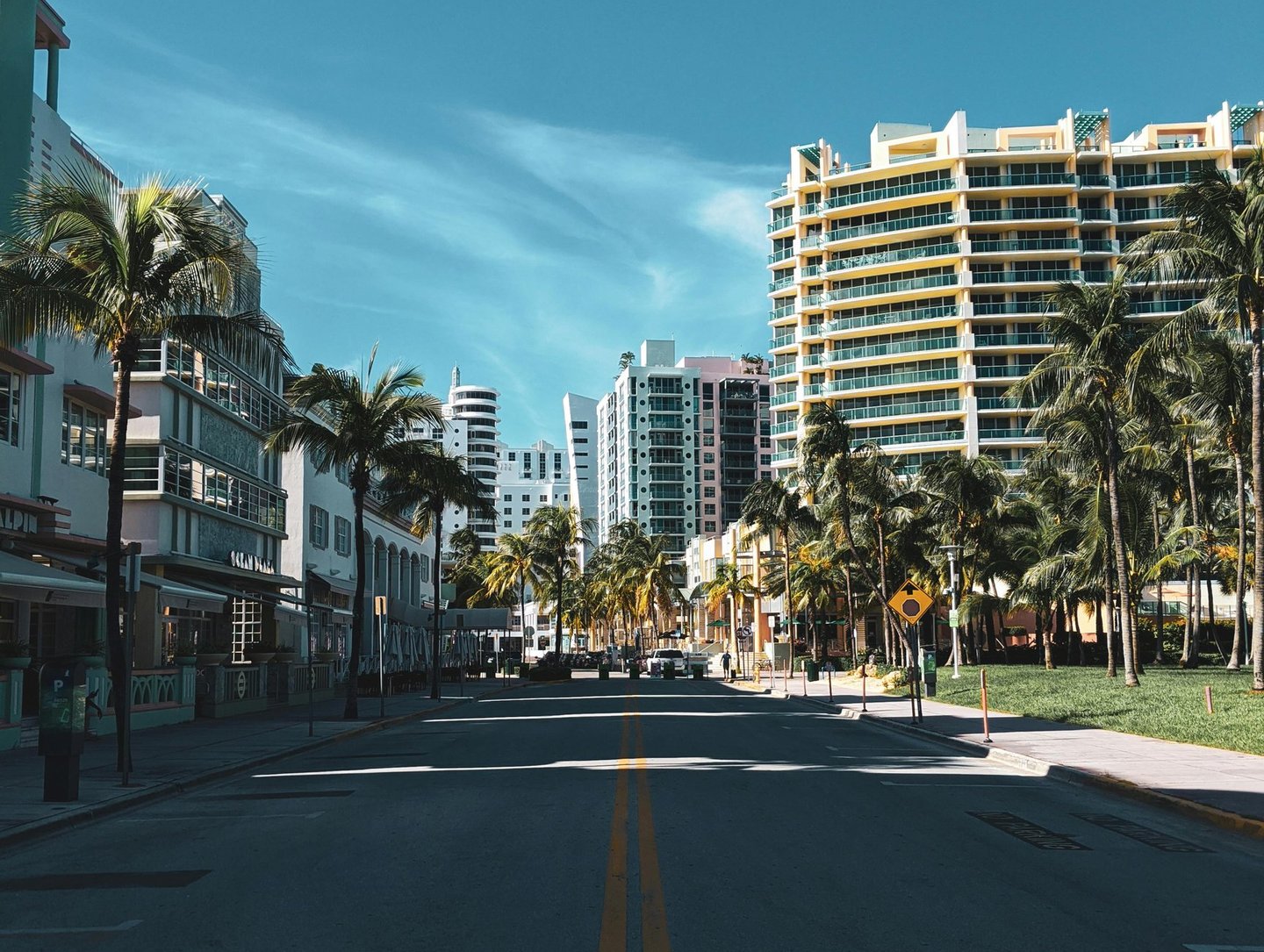
Street in Miami with its typical palm trees
Where to Stay in Miami: Best Neighborhoods
South Beach
The most internationally recognized Miami neighborhood balances historic Art Deco architecture with contemporary beach culture. Ocean Drive's pastel buildings draw crowds, while quieter residential streets reveal the district's architectural richness.
Best for: Art Deco architecture, beach access, dining variety, nightlife.
Design District
Once a sleepy furniture district, this neighborhood has transformed into Miami's luxury retail and dining destination. Flagship boutiques from international luxury brands line Palm Court, while galleries and showrooms occupy surrounding blocks.
Best for: Luxury shopping, contemporary art galleries, innovative dining
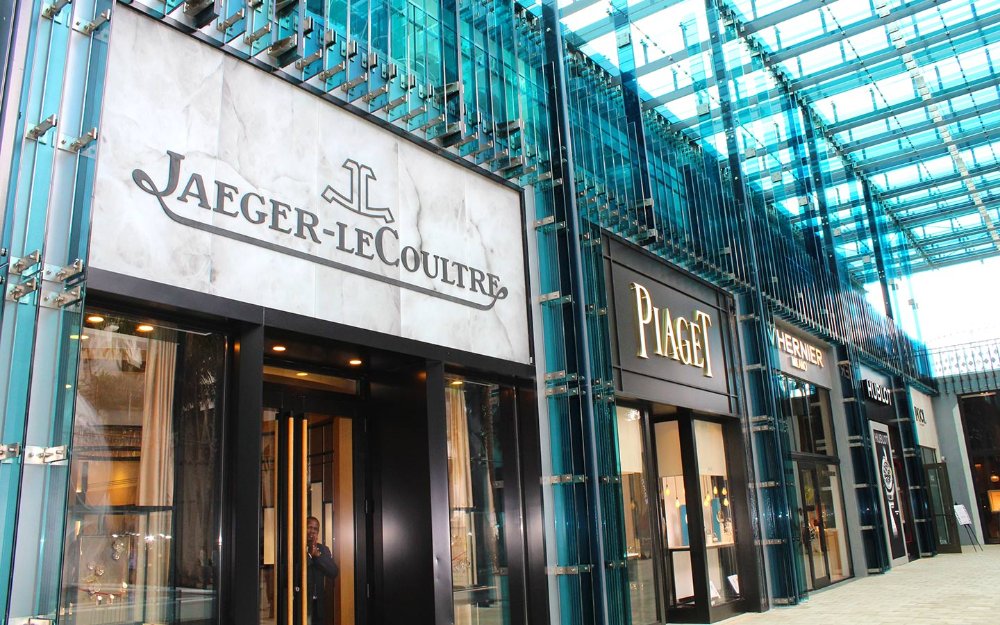
The Design District combines luxury retail with world-class dining
Coral Gables
George Merrick's 1920s planned community maintains its Mediterranean Revival character through strict architectural controls. Tree-canopied streets lead to notable architecture, the Biltmore Hotel, and the Venetian Pool.
Best for: Historic architecture, refined dining, peaceful atmosphere
Coconut Grove
Miami's oldest continuously inhabited neighborhood retains village-like character despite proximity to downtown. Bayfront parks, sailing clubs, and bohemian roots create atmosphere distinct from Miami's newer districts.
Best for: Bayfront setting, relaxed atmosphere, Vizcaya proximity.
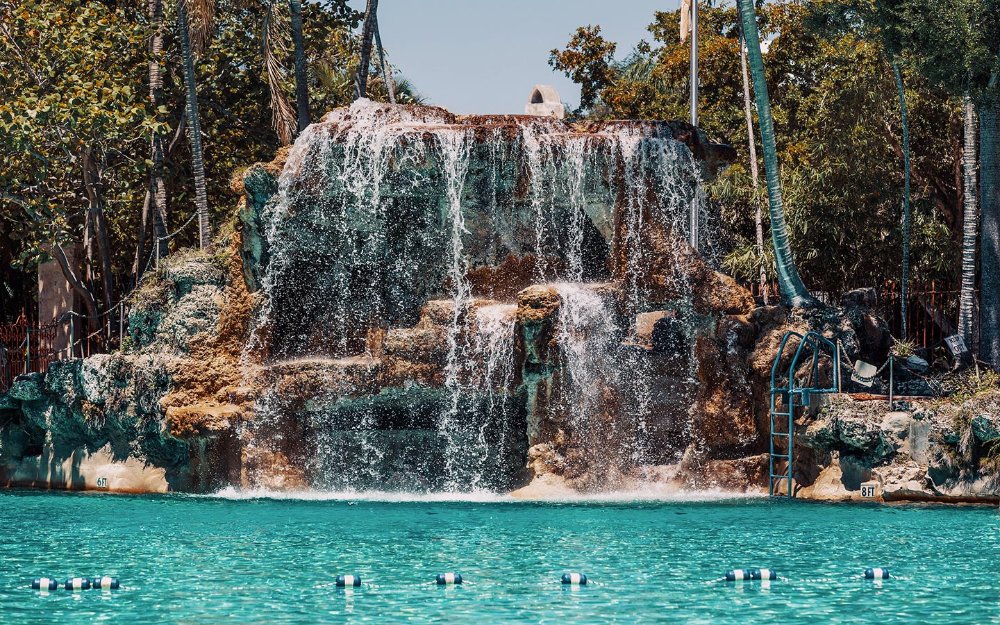
Venetian pool in Coral Gables
Best Luxury Hotels in Miami
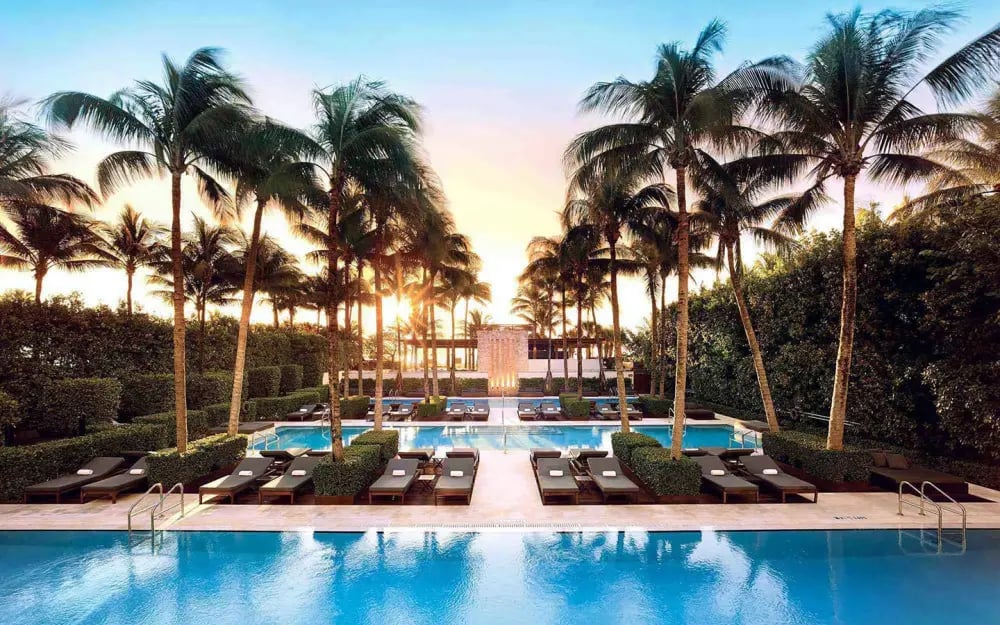
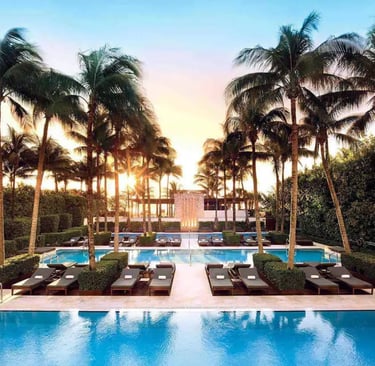
The Setai's cascading infinity pools set the standard for Miami Beach luxury
The Setai Miami Beach
The Setai represents Miami's most refined Asian-inspired luxury, where minimalist elegance meets impeccable service. Three infinity pools cascade through the property, each maintained at different temperatures, creating aquatic sanctuaries that transcend typical resort amenities. Suites feature floor-to-ceiling windows, Dornbracht fixtures, and technology that disappears until needed.
The beachfront location provides direct access to Miami Beach's finest stretch of sand, while the spa offers treatments inspired by ancient Asian traditions. Service is intuitive without being intrusive—staff anticipate needs while respecting privacy.
Best for: Travelers seeking tranquility and refined Asian aesthetics in a beachfront settingFour Seasons Hotel Sydney
Faena Hotel Miami Beach
Faena reimagines luxury through theatrical grandeur, where every detail serves the narrative of sophisticated drama. The property's gilded aesthetic, curated by film director Baz Luhrmann and designer Alan Faena, creates spaces that feel simultaneously contemporary and timeless. Red and gold dominate the color palette, while marble and crystal surfaces reflect light throughout public areas.
The Cathedral theater hosts performances ranging from intimate concerts to ambitious theatrical productions. Tierra Santa, the healing house, offers treatments that blend ancient wisdom with contemporary wellness practices. Los Fuegos restaurant, helmed by Francis Mallmann, serves Argentine-inspired cuisine over open flames
Best for: Culturally curious travelers who appreciate bold design and curated artistic experiences.
Four Seasons Hotel at The Surf Club
Occupying the historic Surf Club—once the private domain of Winston Churchill and Frank Sinatra—this Four Seasons property balances heritage with contemporary luxury. The original 1930s building has been meticulously restored, while new tower accommodations offer ocean or bay views through expansive windows.
Four restaurants include Le Sirenuse Miami, an outpost of the legendary Positano establishment, and The Surf Club Restaurant by Thomas Keller. The beach club atmosphere recalls the property's glamorous past while delivering modern comforts. Service follows Four Seasons' exacting standards, with staff demonstrating genuine knowledge of the property's history and Miami's offerings.
Best for: Travelers appreciating historical significance, exceptional dining, and Four Seasons reliability.
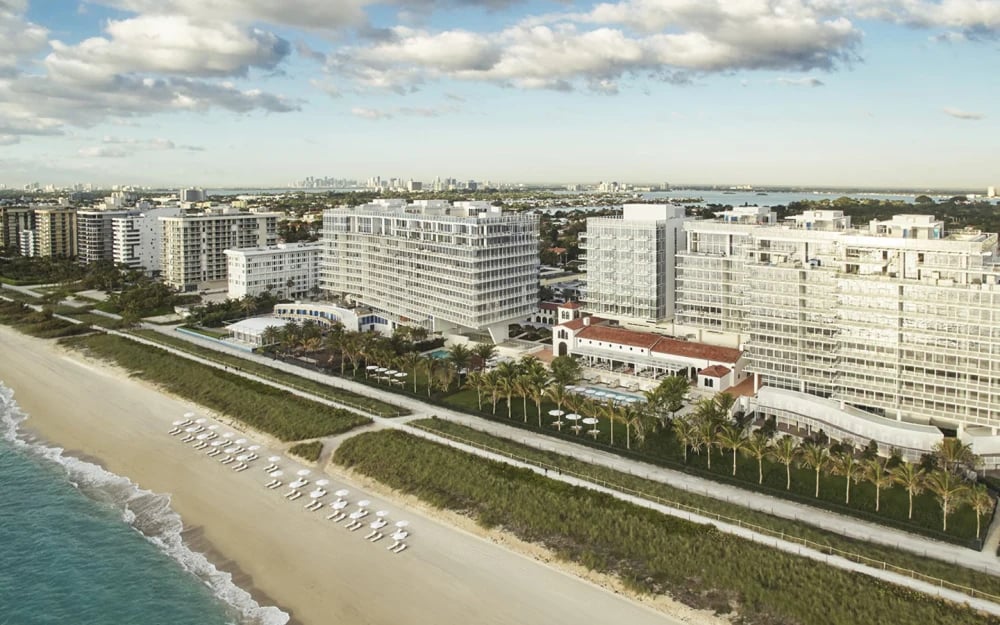
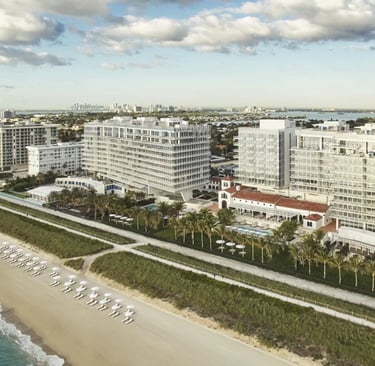
The Surf Club blends 1930s glamour with Four Seasons contemporary luxury
Boutique Excellence
The Plymouth South Beach
This Art Deco gem captures 1940s Miami Beach through thoughtful restoration rather than theme park recreation. Original terrazzo floors, porthole windows, and streamlined details reflect the property's architectural heritage. Rooms avoid excessive ornamentation, instead focusing on quality materials and functional elegance.
The beachfront location provides access to a quieter stretch of sand, away from South Beach's more frenetic energy. The Gale Hotel next door (under same management) shares amenities, including Dolce Italian restaurant and Regent Cocktail Club.
Best for: Architecture enthusiasts seeking authentic Art Deco experience with modern comfort.
Biltmore Hotel
Rising above Coral Gables since 1926, the Biltmore Hotel represents Miami's golden age of Mediterranean Revival architecture. The 315-foot tower, inspired by Seville's Giralda, dominates the Coral Gables skyline, while the property's 150 acres include one of the country's largest hotel pools.
Restoration has preserved original details while updating infrastructure and amenities. The golf course, designed by Donald Ross, remains one of Florida's most respected layouts. Sunday brunch in the Palme d'Or dining room continues a decades-long tradition of refined weekend dining.
Best for: Travelers valuing historic ambiance, championship golf, and Coral Gables location
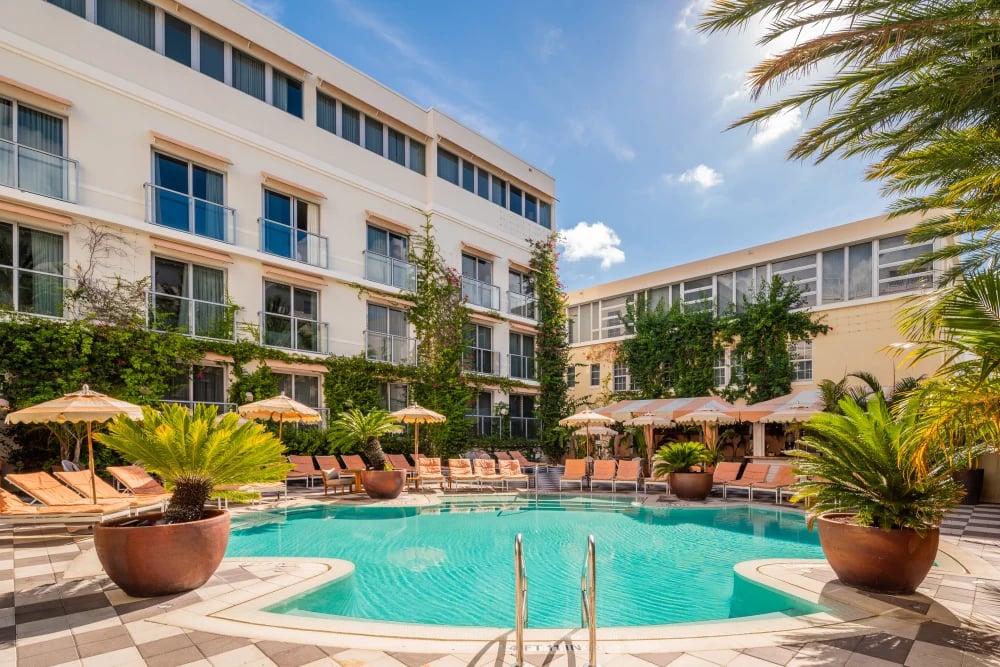
The Plymouth preserves authentic 1940s Art Deco character
Top Things to Do in Miami
Pérez Art Museum Miami (PAMM)
Herzog & de Meuron's suspended garden structure houses Miami's premier contemporary art museum, with collections emphasizing Caribbean, Latin American, and international contemporary work. The building itself rewards study—suspended gardens provide shade while framing Biscayne Bay views, and open-air spaces blur boundaries between interior galleries and tropical landscape.
Rotating exhibitions showcase established and emerging artists, with particular strength in Latin American contemporary art. The permanent collection includes works by Ai Weiwei, Yayoi Kusama, and Kehinde Wiley. Verde restaurant, overlooking the bay, serves Michael Schwartz's Latin-inspired cuisine.
Recommended visit: Thursday for extended hours, optimal light for viewing bay through building's open structure
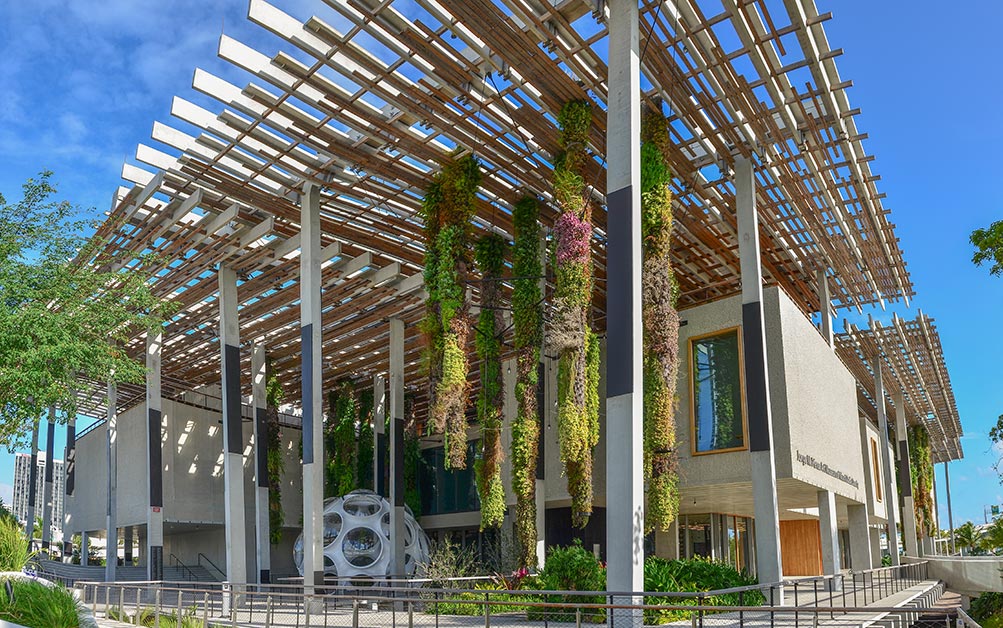
PAMM's suspended gardens frame
The Bass
Following comprehensive expansion by Arata Isozaki and David Gauld, The Bass has emerged as Miami Beach's most significant art institution. The collection spans contemporary work and historic art, with strengths in fashion, design, and contemporary painting. Rotating exhibitions often focus on single artists or specific movements.
The sculpture garden provides outdoor viewing space, while the architecture successfully integrates original 1930s Art Deco building with contemporary additions. The museum's Miami Beach location makes it easily accessible from South Beach hotels.
Recommended visit: Sunday for free admission, quieter viewing experience
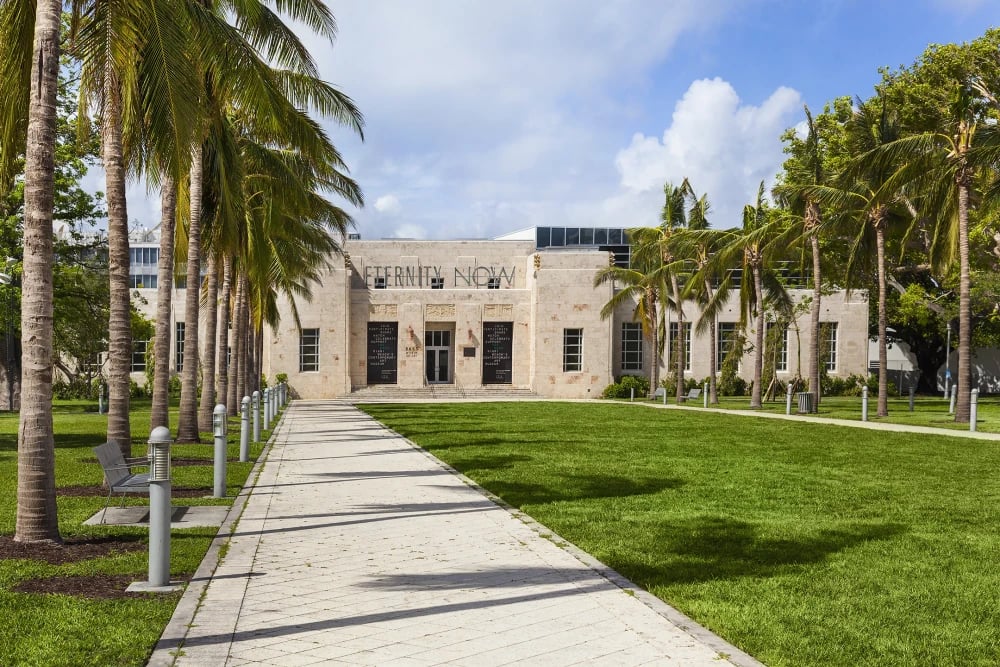
The Bass successfully integrates Art Deco heritage with contemporary expansion
Art Deco Historic District Walking Tour
Miami Beach preserves the world's largest collection of Art Deco architecture, with over 800 buildings constructed between 1923 and 1943. Self-guided exploration reveals streamlined facades, porthole windows, racing stripes, and pastel color schemes that define the style.
Key buildings include the former Versace Mansion (Casa Casuarina), Carlyle Hotel, Colony Theatre, and Wolfsonian Museum. Early morning or late afternoon light best reveals architectural details. The Miami Design Preservation League offers guided tours providing historical context.
Best approached: Early morning for optimal light, fewer crowds, opportunity for architectural photography
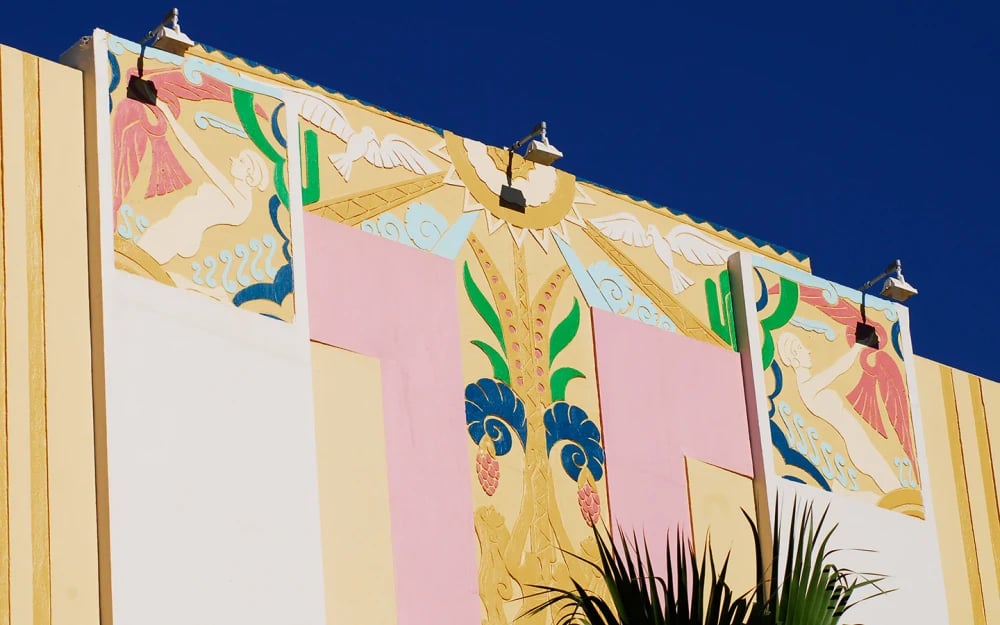
Art Deco's distinctive elements define South Beach's architectural character
Vizcaya Museum and Gardens
James Deering's 1916 Italian Renaissance-style villa represents Miami's Gilded Age aspirations, with 34 decorated rooms surrounding a central courtyard. European antiquities, tapestries, and decorative arts fill the interior, while formal gardens descend toward Biscayne Bay.
The gardens, designed by Diego Suarez, blend Italian and French formal traditions with tropical plantings. Secret gardens, fountains, and garden rooms reward extended exploration. The bayfront overlook provides perspective on the estate's relationship to water.
Recommended visit: Morning for cooler temperatures in gardens, optimal light for photography
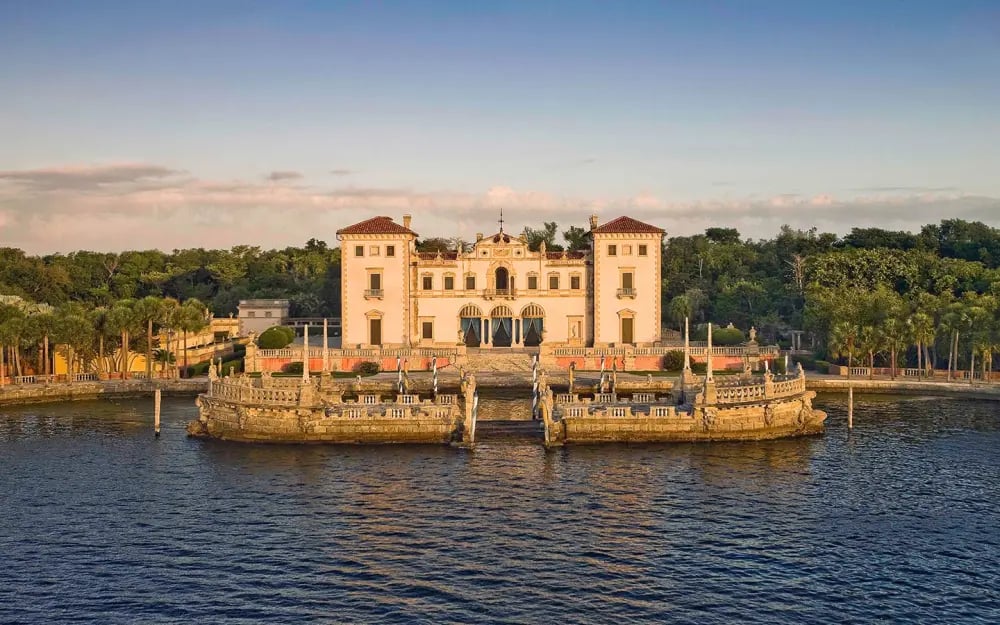
Vizcaya represents Miami's Gilded Age aspirations
Private Yacht Charter to Biscayne Bay
Biscayne Bay's protected waters and mangrove islands provide unique perspective on Miami's geography and natural environment. Private charter allows customized itinerary, whether focusing on sandbar socializing, island exploration, or simply cruising while viewing Miami's skyline from the water.
Half-day charters (4 hours) allow sufficient time for bay exploration and sandbar anchorage. Full-day options (8 hours) enable reaching Boca Chita Key in Biscayne National Park, with lighthouse viewing and pristine snorkeling. Evening departures capture sunset over Miami skyline.
Best timing: Weekday mornings for quieter waters, optimal weather conditions
Lapis Spa at Fontainebleau
Spanning 40,000 square feet, Lapis represents Miami's most comprehensive spa facility, with 30 treatment rooms, mineral-rich hydrotherapy pools, and innovative therapies ranging from traditional massage to cryotherapy and LED light therapy.
The couples' treatment suite includes private hydrotherapy circuit. The hammam provides authentic Turkish bath experience. Treatments incorporate both traditional techniques and contemporary wellness trends. Post-treatment relaxation areas encourage extended visits.
Recommended treatment: Lapis signature massage combining multiple techniques, followed by hydrotherapy circuit
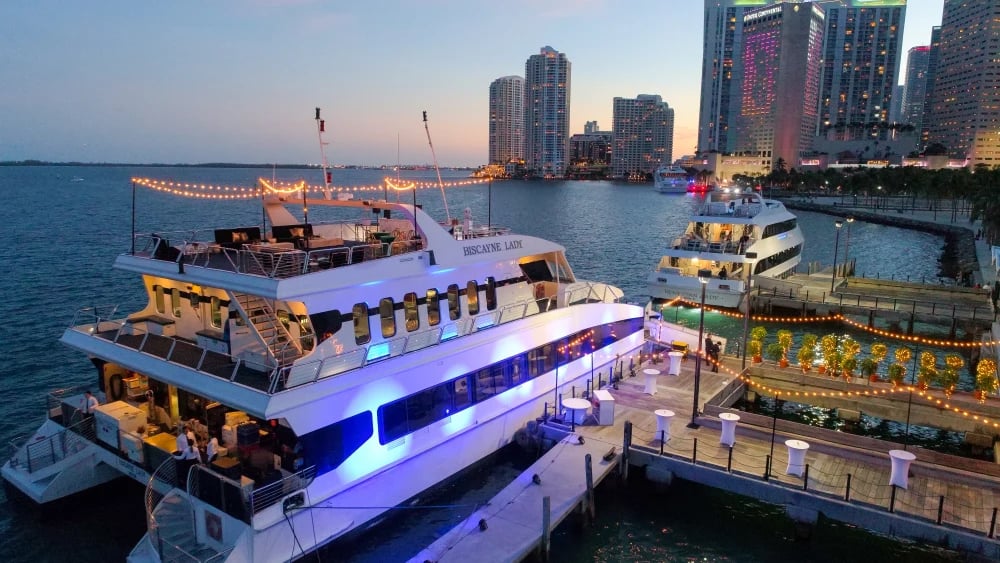
Biscayne Bay offers unique perspective on Miami's geography and skyline
Book on Booking.com | Expedia | Hotels.com | GetYourGuide
Miami Exceptional Dining
Fine Dining
Le Sirenuse Miami
Antonio Mermolia brings the essence of Positano's legendary hotel restaurant to Miami's shores, creating a dining experience that honors Italian tradition while embracing local ingredients. The menu evolves with seasonal availability, though certain signatures—the mezze maniche with octopus ragù, the Dover sole prepared tableside—remain constants.
The dining room's Murano glass chandeliers and custom Fornasetti wallpaper create an atmosphere of coastal Italian elegance. The wine list emphasizes Italian producers, with particular depth in Campania and Piedmont selections. Service demonstrates genuine Italian hospitality rather than formal rigidity.
Reservations essential: Book 4-6 weeks ahead for prime times
L'Atelier de Joël Robuchon
Robuchon's Miami outpost maintains the concept that made L'Atelier a global phenomenon—counter seating surrounding an open kitchen where chefs prepare French technique-driven dishes with Japanese precision. The tasting menu format allows progression through Robuchon's greatest hits: the legendary potato purée, langoustine ravioli with cabbage and foie gras, and caramelized quail.
The Design District location brings contemporary edge to Robuchon's classic approach. Counter seating encourages interaction with chefs, while the open kitchen provides theater without spectacle. Wine pairings lean French, with sommeliers demonstrating encyclopedic knowledge of Burgundy and Bordeaux.
Stubborn Seed
Jeremy Ford's Stubborn Seed offers refined New American cuisine in an intimate setting that eschews South Beach's typical flash. The chef's counter provides optimal vantage for observing the kitchen's precise execution, while dining room tables offer more conventional seating.
The tasting menu changes frequently, though Ford's signatures—smoked sturgeon with everything bagel, wagyu with bone marrow and fermented mushroom—appear regularly. The wine program emphasizes smaller producers and unexpected regions. Service is knowledgeable without pretension.
Reservations recommended: Book 2-3 weeks ahead
Elevated Casual Dining
Zak the Baker
Zak Stern's bakery-café has become a Wynwood institution, drawing crowds for naturally leavened bread, pastries, and straightforward breakfast and lunch preparations. The sourdough, made using traditional techniques and long fermentation, has achieved near-cult status among Miami's food community.
Morning offerings include simple but exceptional pastries—kouign amann, croissants, danishes—alongside heartier breakfast sandwiches and bowls. Lunch brings salads and sandwiches showcasing the bread's quality. Counter service and communal seating create casual atmosphere.
Best for: Exceptional bread, casual morning meals, Wynwood art district exploration
Michael's Genuine Food & Drink
Michael Schwartz's flagship restaurant helped establish Miami's farm-to-table movement before that phrase became ubiquitous. The menu changes daily based on available ingredients, though certain crowd favorites—the wood-oven pizzas, crispy homemade potato chips with blue cheese, fresh fish preparations—remain menu constants.
The Design District location offers indoor-outdoor seating, with garage doors opening to the street. The bar program emphasizes classic cocktails executed with quality ingredients. Service is informed and efficient without feeling rushed.
Reservations recommended: Book 1-2 weeks ahead for dinner.
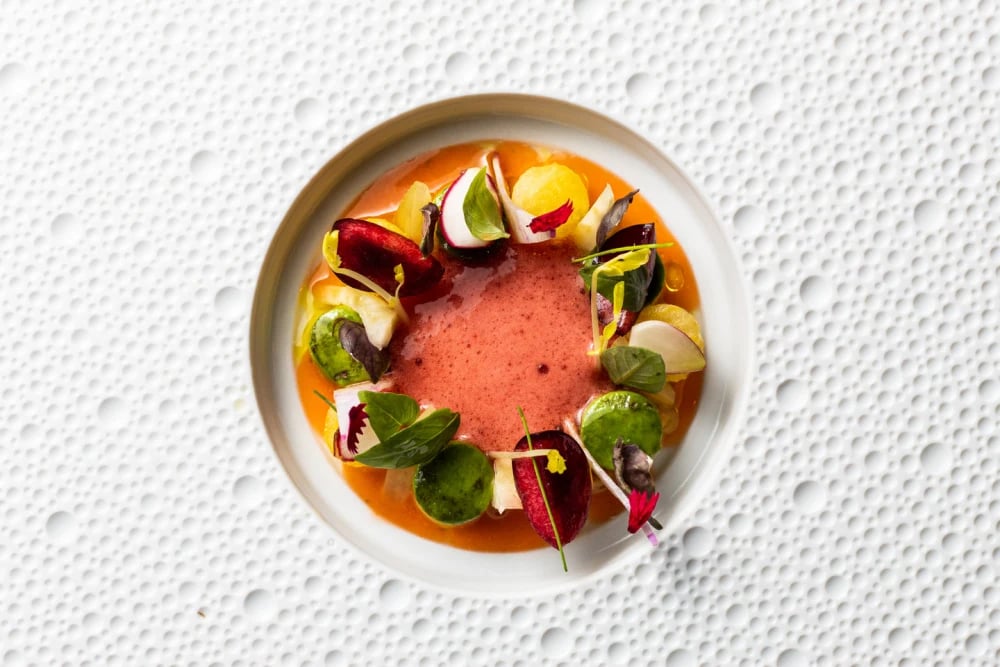
L'Atelier's offers intimate views of French culinary precision
Practical Information
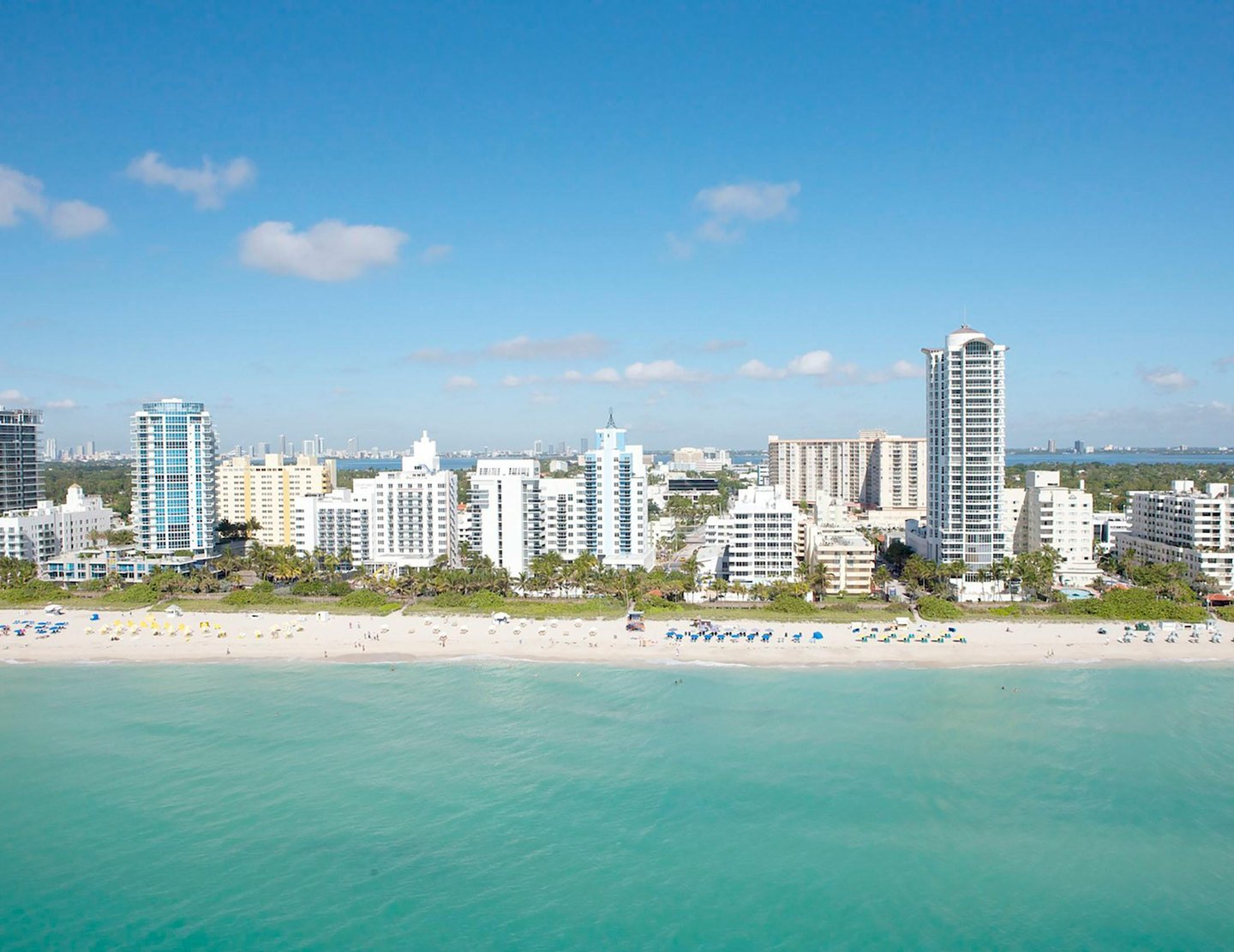
Aerial view of Miami Beach
Seasonal Highlights
Winter (December-February)
Art Basel Miami Beach (December)
Peak beach weather
Winter performing arts season
Spring (March-May)
Miami Open tennis tournament
South Beach Wine & Food Festival
Warm weather, manageable humidity
Summer (June-August)
Lower hotel rates
Afternoon thunderstorms
Indoor cultural attractions
Fall (September-November)
Lowest rates
Hurricane season considerations
Art Basel early booking period
Frequently Asked Questions
Q: Is Miami safe for tourists?
A: Tourist areas (South Beach, Design District, Coral Gables, Coconut Grove) are generally safe with standard urban precautions. Avoid isolated areas after dark, use registered taxis/rideshares.
Q: Do I need a car in Miami?
A: Depends on itinerary. South Beach exploration possible without car. Visiting multiple neighborhoods, Everglades, Keys benefits from rental car. Uber/Lyft available throughout metro area.
Q: What's the best beach in Miami?
A: South Beach (5th-15th Streets) offers classic Miami Beach experience with Art Deco backdrop. North Beach (mid-70s streets) provides quieter atmosphere. Key Biscayne's Crandon Park Beach offers pristine sand and calm waters.
Q: How many days should I spend in Miami?
A: Minimum 3-4 days allows experiencing beaches, one neighborhood exploration, and several dining experiences. 5-7 days enables deeper neighborhood discovery, day trip to Everglades or Keys, and more comprehensive cultural exploration.
Q: What should I avoid in Miami?
A: Tourist trap restaurants on Ocean Drive (move one block inland for better quality/value). Excessive sun exposure (Florida sun is intense). Driving in South Beach during peak season (parking difficult, traffic frustrating).
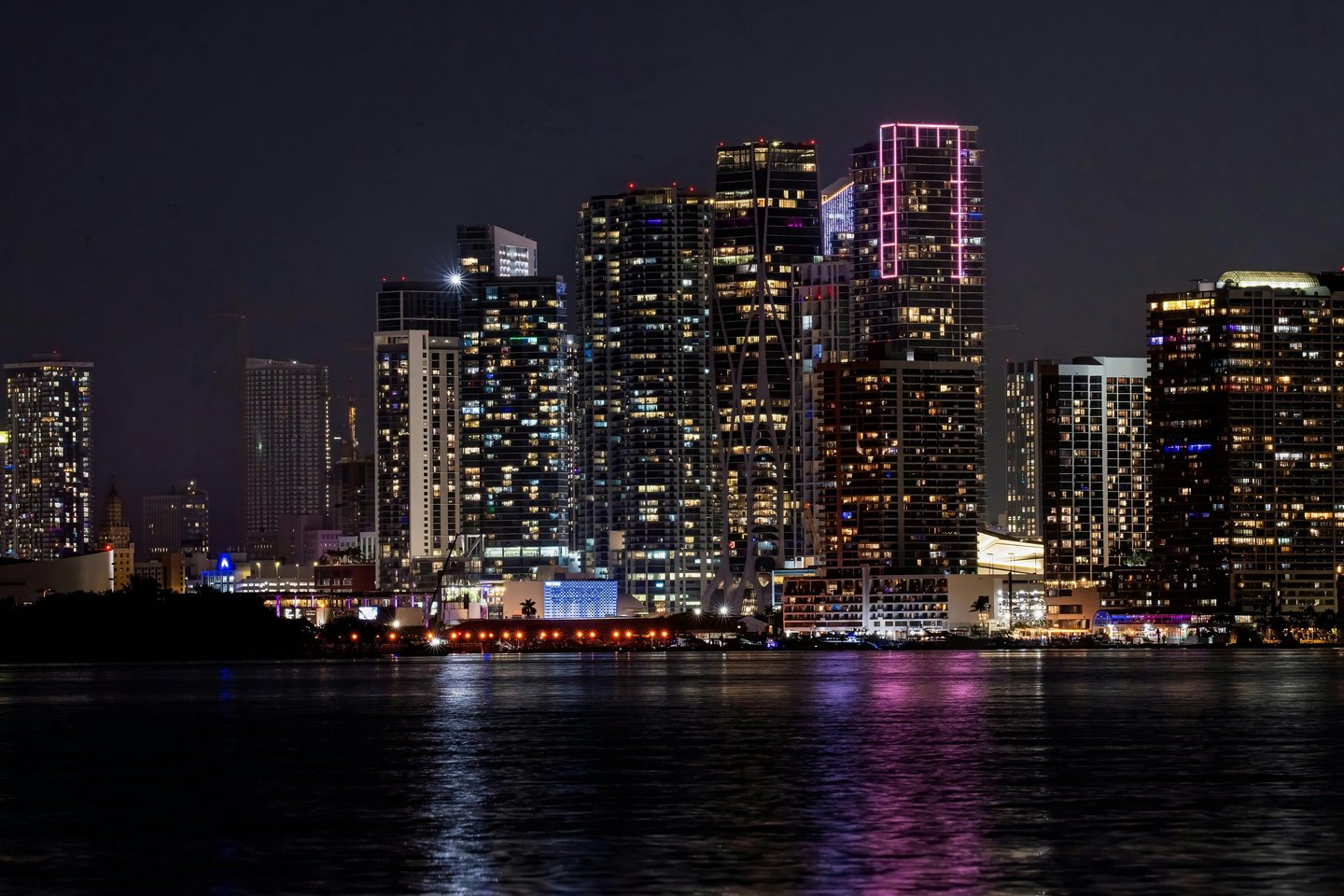
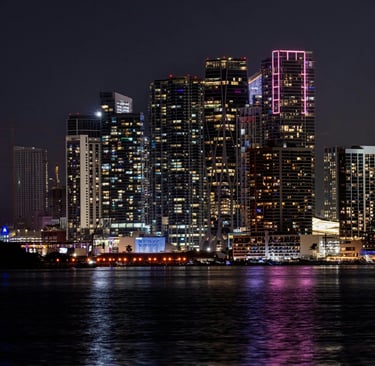
View of Miami skyline at night
Insider Tips
Restaurant reservations: Book notable restaurants 3-4 weeks ahead, particularly for Friday-Saturday dinner. Le Sirenuse, L'Atelier require more advance planning.
Beach timing: Arrive at South Beach before 10am for optimal parking, beach positioning. Late afternoon provides beautiful light, cooler temperatures.
Art Deco appreciation: Early morning walks through South Beach reveal architectural details without crowds. The Bass museum visit can precede beach time.
Design District exploration: Thursday evenings feature extended gallery hours, less daytime heat. Combine gallery viewing with dinner reservations.
Wynwood street art: Visit mid-morning for optimal photography light, before afternoon heat. New murals appear constantly—repeated visits reveal changes.
Ready to experience Miami's sophisticated side? Start planning your luxury Miami getaway today.
Check travel packages on Expedia | Find tours on GetYourGuide
Hotels • Flights • Tours • Activities
“© 2025-2026. All rights reserved.
This blog may contain affiliate links, which means I might earn a small commission, at no extra cost to you, if you decide to make a booking through one of these links. I only recommend products and services I actually use or genuinely believe will bring value. For more information visit http://paidforadvertising.com. Thank you for your support!
Affiliate Disclosure


Important Links
Continents
Find Us Here
Follow Us
Welcome to The Gilded Way, your premier guide to crafting journeys that are seamless as they are extraordinary. We believe that travel is not just about the destination, it's about the richness of the experience - from the first spark of inspiration to the memories you bring home.